By Yereth Rosen
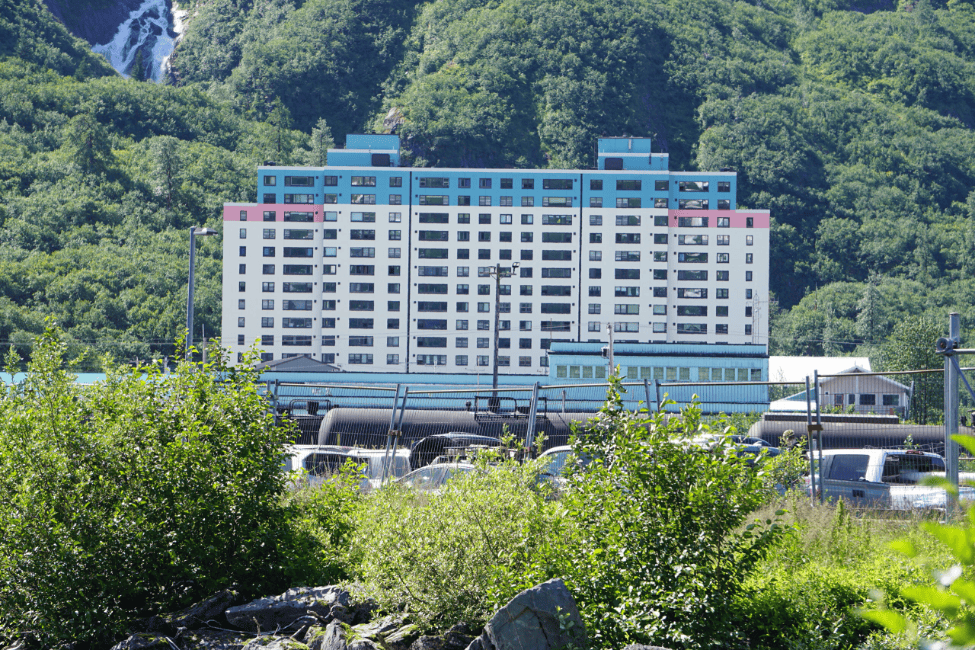
The Prince William Sound town of Whittier is sometimes called the “strangest town in Alaska” because nearly all of its roughly 250 residents dwell in a single high-rise building. Now it has another claim to fame: It is designated by the National Park Service as one of the nation’s American World War II Heritage Cities.
The designation, announced last week, is part of the Park Service’s American World War II Heritage City Program, created in 2019 as part of the John D. Dingell Jr. Conservation, Management, and Recreation Act. Under the program, one city in each state or territory can receive the designation.
Whittier was one of 10 cities honored last week. Among the others were Charlotte Amalie, U.S. Virgin Islands; Pendleton, Oregon, and Honolulu, Hawaii.
“These designations highlight the enduring legacy of service, sacrifice, innovation, and industrial achievement that helped establish the United States as the “Arsenal of Democracy” and continue to shape our national story,” Jessica Bowron, the National Park Service’s acting director, said in a statement. “The 2026 designations reinforce the role communities played across the country, from manufacturing critical military equipment to hosting strategic training facilities, and their ongoing work to preserve and interpret this history for future generations.”
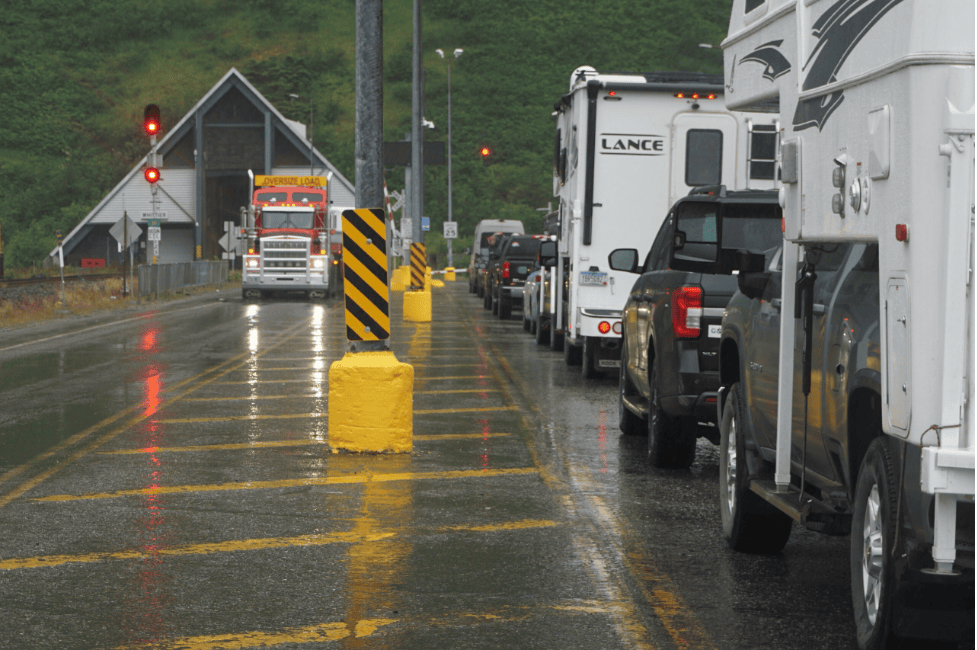
Whittier’s World War II designation stems from its service as a supply and support center for the war effort in Alaska. To put Whittier into use, the Army blasted a tunnel through Maynard Mountain and laid a rail spur connecting the site with the Alaska Railroad. The rail link to the port town was completed in 1943.
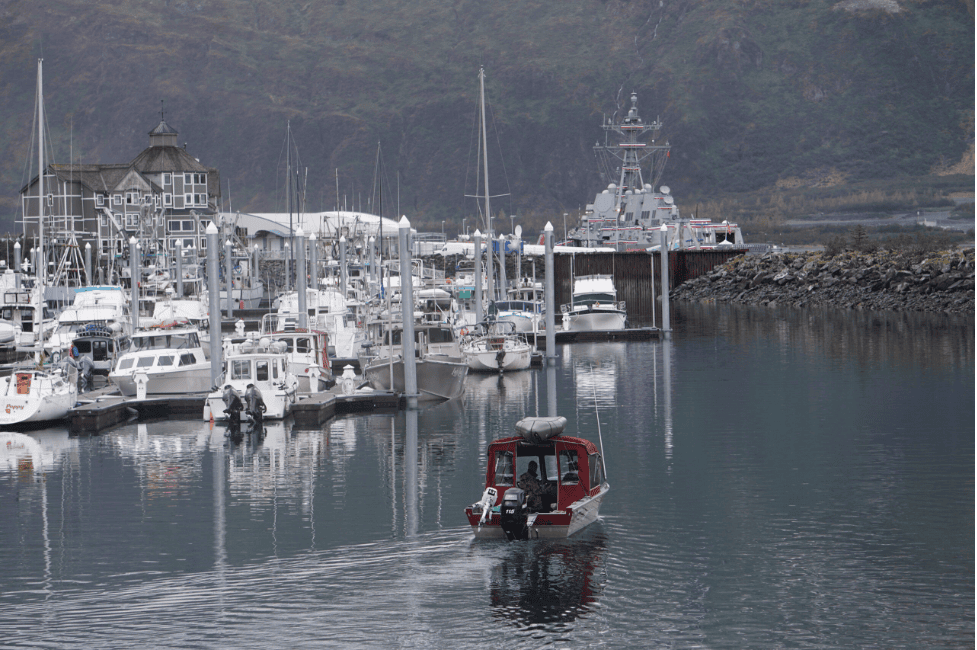
Aside from its handy location as a transportation hub — a function the city continues to serve — Whittier had another attribute that attracted the military. Shrouded by tall mountains and near-constant cloud cover, it was well-hidden from enemy eyes.
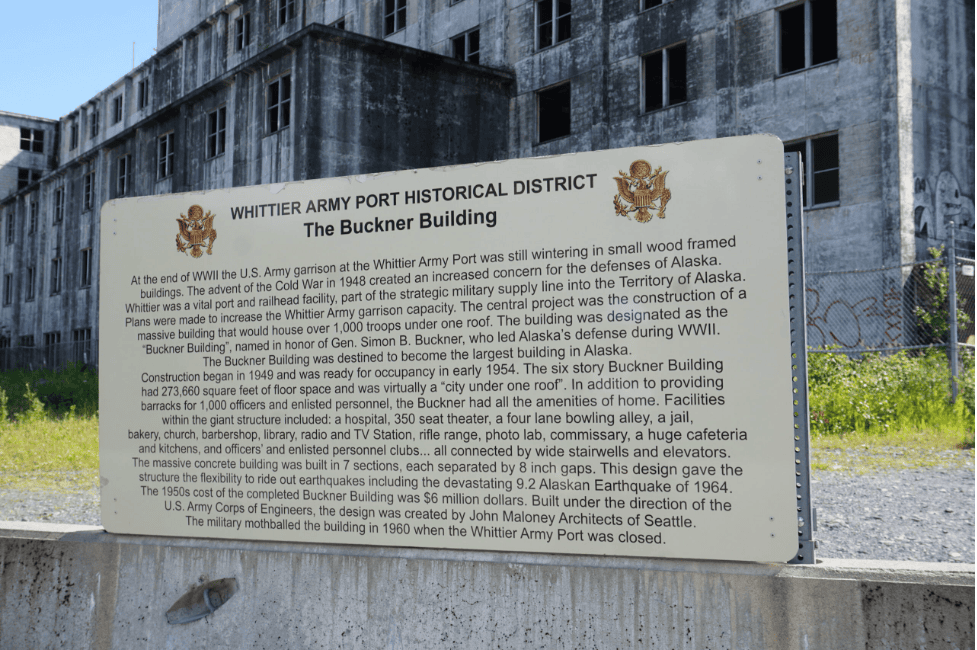
Whittier’s military service continued for a while after the war. The sprawling Buckner Building, completed by the U.S. Army Corps of Engineers in 1953, was considered a city unto itself, with accommodations for 1,000 soldiers and amenities like a theater, bowling alley and hospital. The Corps also completed the 14-story Hodge Building in 1957. It was converted to civilian use and later named for the late U.S. Rep. Nick Begich, D-Alaska, who died in a 1972 plane crash.
The Begich Towers building remains in use as the home of most residents, but the Buckner Building was shut down after only a few years. Local and state officials are trying to figure out what to do with the Buckner building, which has historic status but is also in extreme disrepair and riddled with asbestos and other dangers.
Whittier’s history extends far earlier than its military era.
The same location that made it strategic to the Army also made it important to Indigenous travelers prior to European contact.
A short hike over Portage Pass connected the Prince William Sound homeland of the Alutiiq people and the Cook Inlet region homeland of the Dena’ina people. Portage Pass’ role as a trade link continued after European contact, with explorers and miners also making the quick trek. In the past, travelers crossed a portion of Portage Glacier, but the glacier has since receded dramatically.
Now part of the Chugach National Forest, Portage Pass remains a popular hiking destination. The modern recreation trail runs about 2 miles from the Whittier trailhead to Portage Lake, still linking the Alutiiq and Dena’ina homelands.
Whittier’s new designation adds to others in Alaska that honor the state’s role in World War II.
Best-known is the National Park Service’s Aleutian Islands World War II Heritage Area. Based in Unalaska, it commemorates the war history in the Aleutians, which includes the 1942 Battle of Attu, the Dutch Harbor bombing and the trauma endured by the Indigenous Unangan people.
Comments 0