By Gretchen Wehmhoff
In February 2023, a major fire tore through the block between 8th and 9th Avenues. The blaze moved quickly and, as SFD units arrived, it was nearly 45% engulfed. An all-call went out. Everyone was needed.
Temperatures ranged from 8 -20 degrees with winds from the north at 5 – 28 mph. The strong gusts hindered SFD’s ability to attack from the south, where it might have been able to battle the yards of the businesses.
SFD Chief Emily Rausher turned to Bray Ryan, the city manager, who had joined citizens in supporting the firefighters.
“This is where we could really use a ladder truck,” she said.
A ladder or aerial with a nozzle could get above the fire and reach the other side of the block. Otherwise, all strategies to gain control over this fire were from ground level.
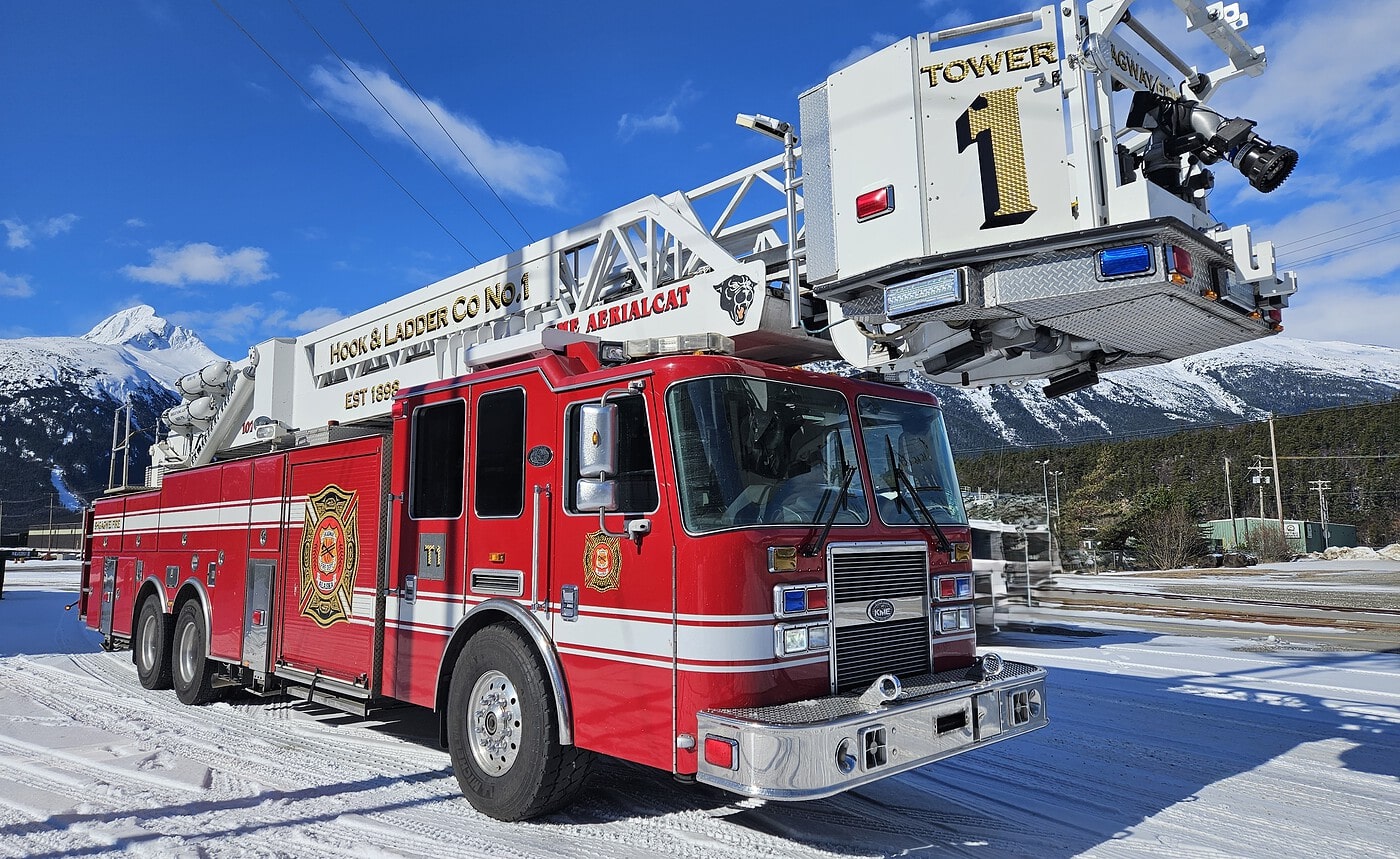
Three years later, Skagway got a break on that ladder truck.
During 2025 fourth-quarter budget meetings, SFD identified extra money that could be put towards one of the department’s needs included in the 2021 audit. That was over four years ago, and the department had more trained crew. Rauscher worked with the same auditor to, “Come on in and grade us on how we’re doing.”
The plan, moving forward, maintained the need for a ladder truck. Now, with a plan, the department’s dedicated funds and approval from the assembly, SFD could move forward to pursue a used truck.
New aerial trucks not only cost over $1.4 million, but the waitlist for a new rig could be years. According to Investigate TV, the wait is longer if departments need specific matching colors or customization. Rauscher wasn’t too concerned about matching colors.
She started researching. They found their truck.
A fire department in Salem, Oregon was “selling their tower [ladder], but it has a bucket on the end, and it has a master stream,” said Rauscher.
The truck can attach a water source to the bucket nozzle [master stream] and operate it from the bucket with or without a firefighter. A second set of ladder and nozzle controls is located with the truck on the ground.
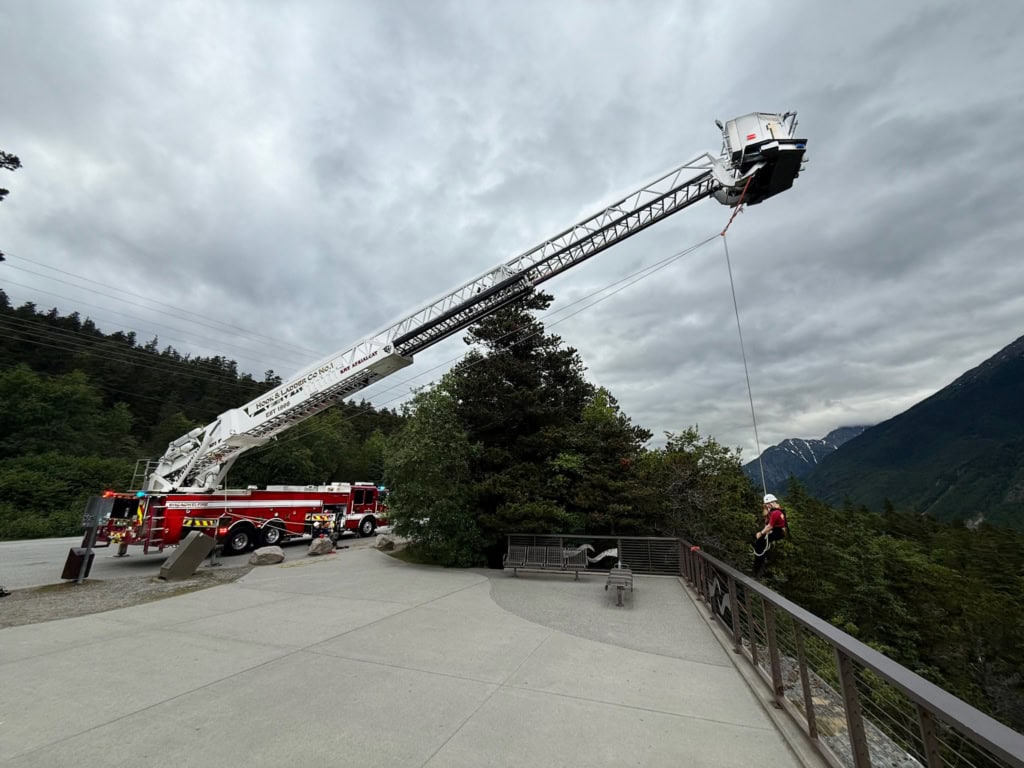
SFD’s longest ladder is 35 ft. Since ladders must lean against something solid, the actual reach of the ladder may be far below its length. This means gaining access to a second- or third-story window in any Skagway building is limited by the ladder’s reach.
The ladder on the truck has a span of 102 ft and is stabilized by the truck.
Rauscher explained the multiple advantages of the ladder, or stick as firefighters call it.
In addition to gaining access above a fire and building, the truck is also an asset in cliff rescues. Recently, the truck helped a worker on a stalled cherry picker get off the rig. The ladder could be invaluable in assisting a cruise ship evacuation, offering an additional egress option on the dock side.
Rauscher contacted Hughes, a part of Pierce, one of the fire truck manufacturers, and asked them to send someone for an on-site inspection.
When she got the report back, she worked with Fire Chief Gerbos in Salem. They negotiated that all of the issues found during the inspection would be taken care of in Oregon before the sale – including the Skagway logos. When the truck arrived, it would be totally refurbished and ready to go.
Once the truck arrived, the fire crew would start immediate training on the “beast,” as they call it.
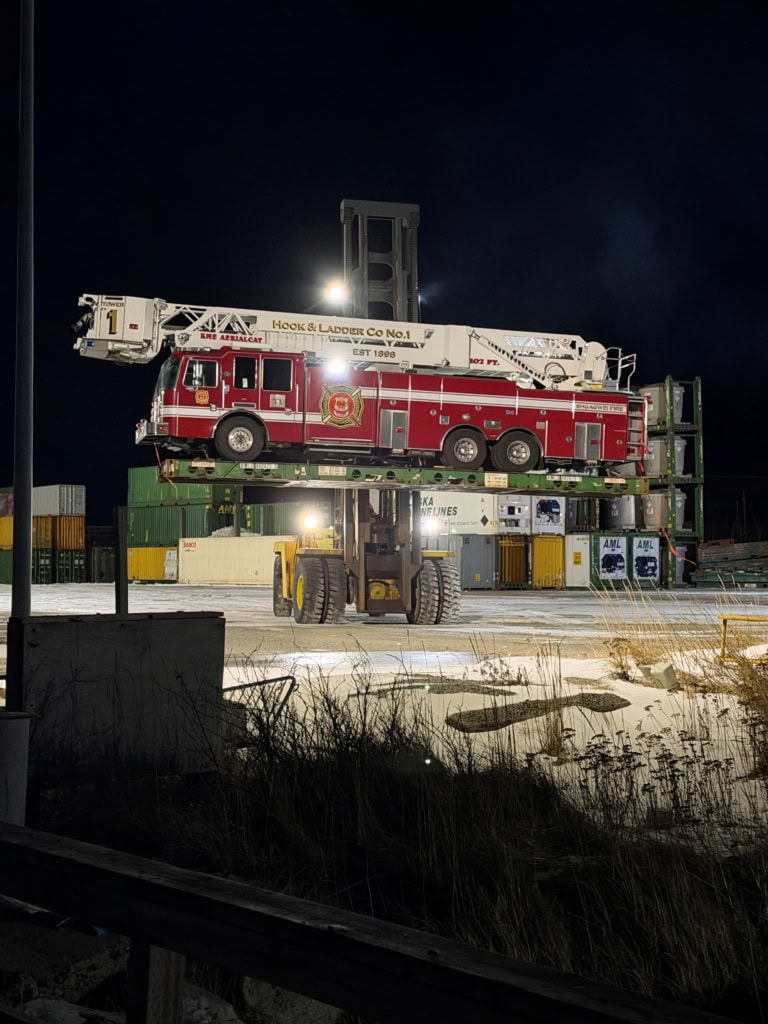
The truck was shipped north via Alaska Marine Lines. After the barge docked, a giant forklift raised the rig off the barge and moved it ashore.
There are 85,823 miles on the vehicle with a Cummins Diesel 525 HP engine. It was put into service in 2010
The truck weighs 80,500 lbs, seats 6, and is 47’1” ft long and 12’1 “ tall.
Just the right fit in the fire station, with room to spare.
Comments 0